History
A People Who Have Never Left
From homelands along the Blackstone and Quinsigamond, through colonization and the fight for recognition, to the community that stands today.
Explore below ↓
Pre-contactHomelands of the Nipmuc
Homelands of the Nipmuc
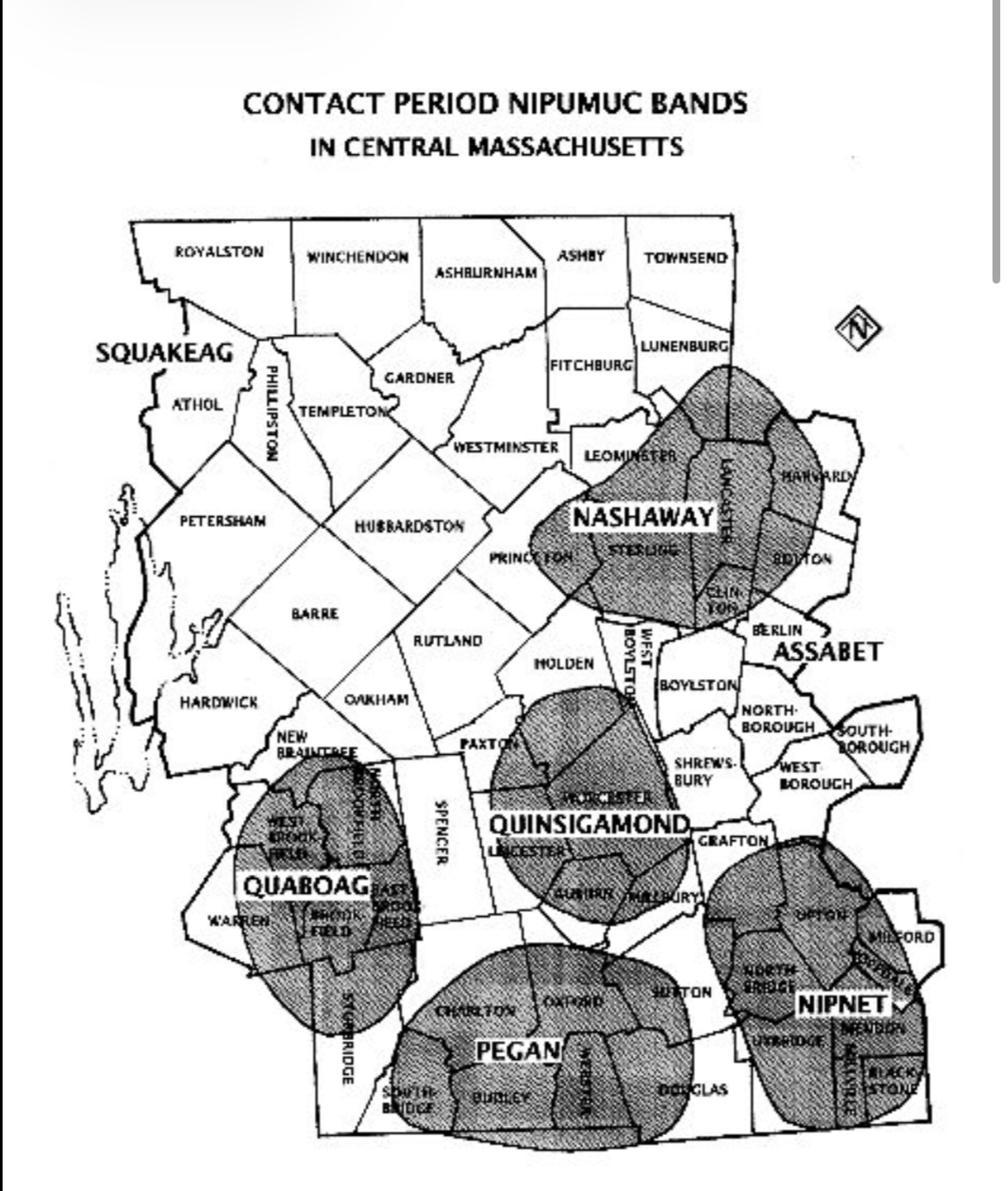
The Nipmuc, "people of the fresh water," lived across what is now central Massachusetts and parts of Connecticut and Rhode Island, along the region's ponds, rivers, and inland waterways.
Colonization eraPraying Towns, War, and Survival
Praying Towns, War, and Survival
Beginning in the 1650s, Puritan missionary John Eliot established "praying towns," Christian Indian settlements meant to convert and control Native populations across the region. Hassanamesit (in present-day Grafton) was one of the original seven praying towns, and one of only two to build its own church. Nipmuc families who moved there did so for varied reasons: protection from Mohawk raids, access to food and education, and the pressures of English expansion into Nipmuc homelands.
When King Philip's War broke out in 1675, Nipmuc people faced an impossible set of choices. Some, like the sachem Muttawmp, led resistance against colonial militias; his forces ambushed and besieged English troops at Brookfield that August. Others, including many at Hassanamesit, initially pledged neutrality before being drawn into the war as the fighting reached Nipmuc country. Still others served as scouts, interpreters, and go-betweens for the English.
That October, colonial authorities interned hundreds of "praying Indians," including Nipmuc families, on Deer Island in Boston Harbor, fearing they might side with the resistance. Confined through the winter with little food or shelter, many died of cold, starvation, and disease. Nipmuc descendants still travel to Deer Island every October to hold a memorial ceremony for those who were held there.
By the war's end in 1676, Nipmuc communities had been devastated: many killed, sold into slavery in the Caribbean, or forced into indenture in English households. Hassanamesit itself sat empty for nearly two decades; when Nipmuc families were finally permitted to return in the 1690s, only five of the original families came back.
- James Printer (Wawaus), a Hassanamesit Nipmuc, helped typeset the Eliot Indian Bible (1663), the first Bible ever printed in British North America, translated into the Algonquian language. During the war he became a scribe for Metacom (King Philip) himself, then later returned to the same Harvard press to set the type for Mary Rowlandson's famous captivity narrative, a book in which he also appears as a character.
- Wheeler's Surprise, the Nipmuc ambush that opened the war in Nipmuc country, forced a siege of Brookfield that colonial relief forces barely survived.
1728The Hassanamisco Reservation
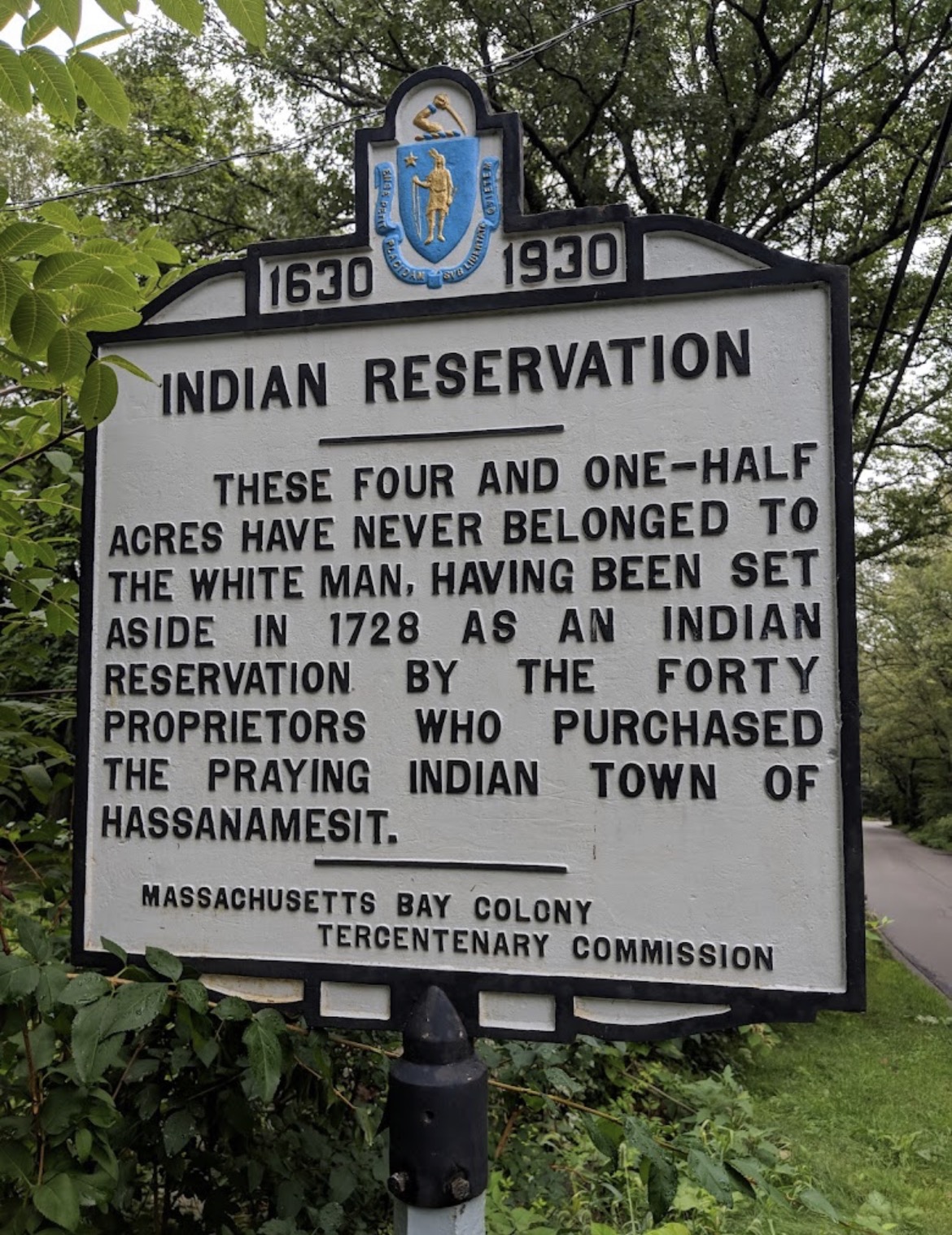
The Hassanamisco Reservation
July 5, 1926The Hassanamisco Club Pow Wow
The Hassanamisco Club Pow Wow
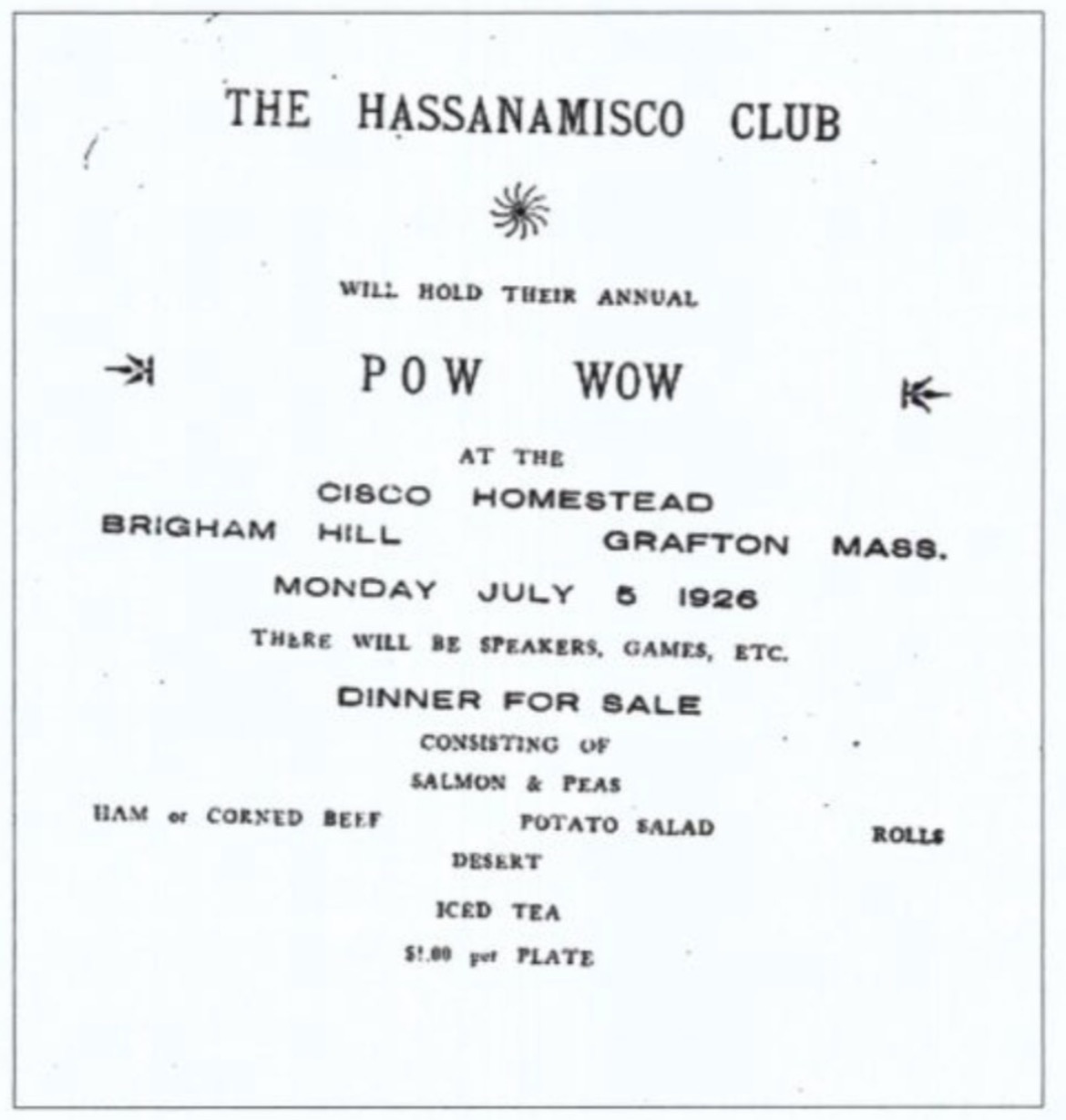
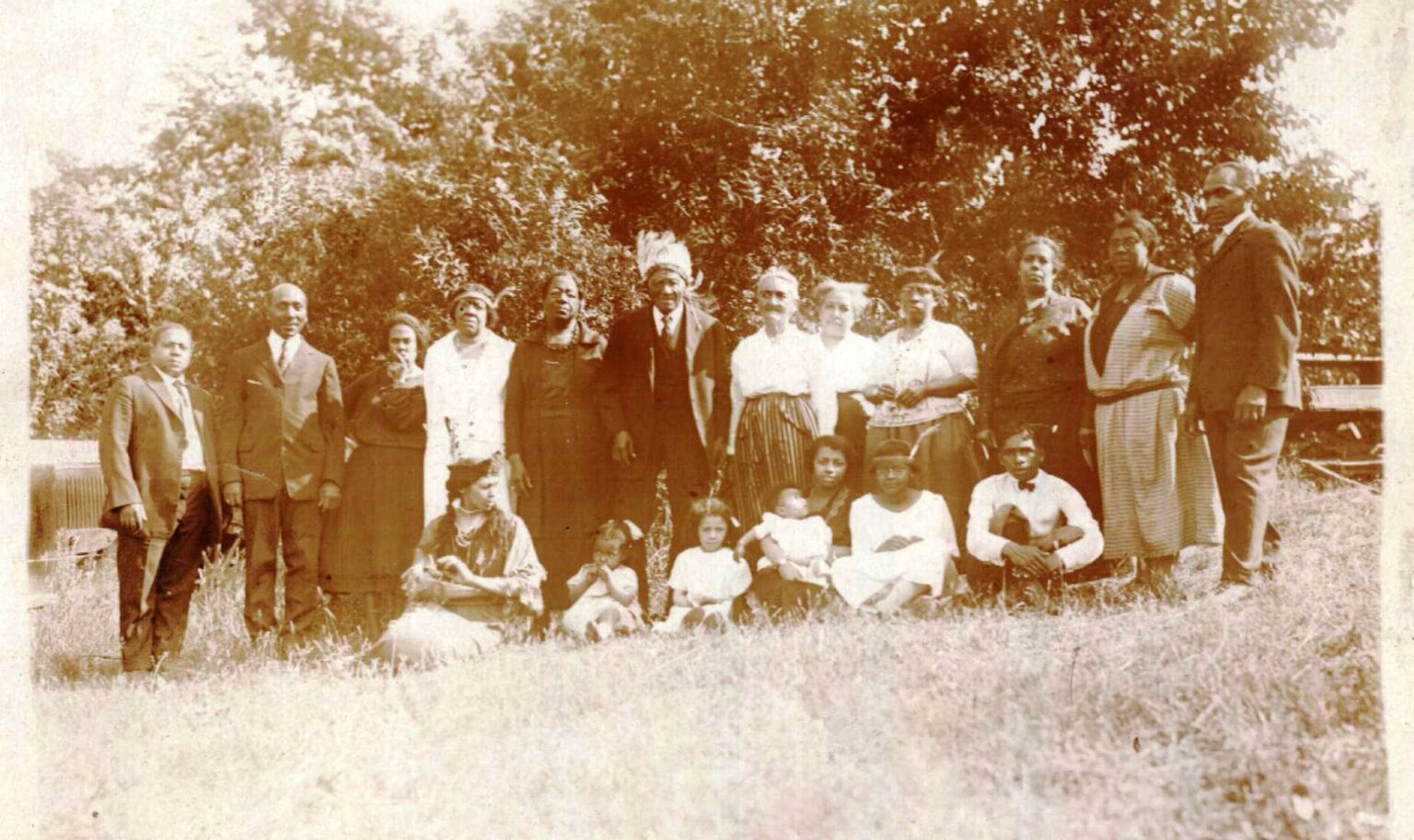
The Hassanamisco Club holds its annual Pow Wow at the Cisco Homestead on Brigham Hill in Grafton, Massachusetts, with speakers, games, and a dinner for sale.
July 8, 1976Executive Order No. 126
Executive Order No. 126
Governor Michael S. Dukakis signs the Executive Order recognizing the Nipmuc, Mashpee, and Gay Head Wampanoag Tribal Councils as the state's official points of contact. Read the full order on the Government page.
1990sFederal recognition petition
Federal recognition petition
The Nipmuc Nation pursues federal acknowledgment.
2004Federal recognition decision
Federal recognition decision
The U.S. Department of the Interior's decision affirms the historical existence of the Hassanamisco Nipmuc people and the long-standing presence of Nipmuc families in the region, while declining acknowledgment under the specific federal criteria in place at the time. Read more on the About Us page.
TodayWe Are Still Here
We Are Still Here
The Nipmuc Nation Tribal Council continues its work: cultural preservation, community events, and advocacy for a united Nipmuc people.
Archive
Community Archive
Historical photographs from the community.
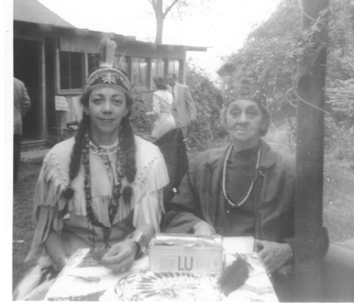
Zara and Sarah at the Hassanamisco Indian Fair, late 1940s.
Sources
References
Historical content on this page draws on the following sources.
View references
- Hassanamisco Indian Museum, "History": nipmucmuseum.org/history
- Access Genealogy, "Nipmuc": dickshovel.com/nipmuc
- Wikipedia, "Nipmuc": en.wikipedia.org/wiki/Nipmuc
- En Academic, "Nipmuc": en-academic.com
- Unitarian Universalist Church of Worcester, "Worcester and the Nipmucs": uucworcester.org
- WPI Libraries, "Chaubunagungamaug and Hassanamisco Nipmuc Tribe: Land & Labor Acknowledgements": libguides.wpi.edu
- Goodreads, "Dismantling Hassanamesit": goodreads.com
- Wikipedia, "Wheeler's Surprise": en.wikipedia.org/wiki/Wheeler's_Surprise
- National Park Service, "Deer Island": nps.gov/places/deer-island
- Atlas Obscura, "Deer Island Nipmuc Memorial": atlasobscura.com
- Boston Athenaeum, "'We have but one man': A Rare Glimpse into the Life and Work of James (the) Printer": bostonathenaeum.org
- Lisa Brooks, "Turning the Looking Glass on King Philip's War: Locating American Literature in Native Space," American Literary History 25, no. 4 (2013): academic.oup.com