Government
How the Nation Governs Itself
Our constitution, our recognized standing with the Commonwealth of Massachusetts, and the official record that guides our government-to-government relationships.
Governing document
The Nipmuc Nation Constitution
The Tribe's constitution is meant to be a living document, one the community can propose changes to as our needs and understanding grow.
Current constitution
The Constitution of the Nipmuc Nation, including ratified amendments, is available below as a downloadable PDF.
Download Constitution (PDF) →Official record
Executive Order No. 126
Signed by Governor Michael S. Dukakis on July 8, 1976, this order names the Nipmuc Tribal Council as the Commonwealth of Massachusetts's recognized point of contact for matters affecting the Nipmuc Tribe.
Read the full Executive Order
WHEREAS, as one of the first Thirteen Colonies, the Commonwealth of Massachusetts has long maintained a special relationship with the Native American people of the region, and
WHEREAS, for over three centuries, the Commonwealth has molded this relationship by Treaty and Agreement, Legislative Act and Executive Order, and has never ceased to recognize their special status, and
WHEREAS, the state has never ceased to recognize its indigenous tribes, living within or near the boundaries of current or former territories and reservations; nor has it ceased to recognize those Tribes with which it has Treaties; and
WHEREAS, there are approximately eight thousand Indians residing within the Commonwealth of Massachusetts, and
WHEREAS, the Tribal Councils of the Nipmuc, Mashpee, and the Gay Head Wampanoag Tribes are the recognized governing bodies, respectively, of the Nipmuc Tribe, the Mashpee Tribe, and the Gay Head Wampanoag Tribe, and exercise substantial governmental functions; and
WHEREAS, there are Wampanoag Indians within the Commonwealth who are members of neither the Gay Head Wampanoag nor the Mashpee Tribes, and
WHEREAS, as further evidence of the Commonwealth's commitment to the Native American people, the General Court has established by Statute (M.G.L. c.7, s. 38) the Massachusetts Commission on Indian Affairs to advise the commonwealth as to how best to establish positive relationships with the Tribes; and
WHEREAS, the General Court of the Commonwealth has enacted a Statute (Act of 1939, C.384) authorizing the Commissioner of Conservation to establish a reservation within the Fall River Freetown State Forest, and
WHEREAS, in 1945, the said Reservation was laid out and established in accordance with the authority conferred by the aforesaid Act of 1939, but has not been further developed; and
WHEREAS, the Massachusetts Commission on Indian Affairs and interested groups have presented to Executive Branch officials information concerning the present availability of certain federal funds and services for the benefit of Native Americans, and
WHEREAS, research indicates that Indians who live within the Commonwealth may be able to qualify for several million dollars of federal funds which the Congress of the United States has made available to provide benefits and services to Native Americans;
NOW, THEREFORE, I, Michael S. Dukakis, Governor of the Commonwealth of Massachusetts, by virtue of all authority vested in me as the Supreme Executive Magistrate, do hereby order as follows:
Section I
State agencies shall deal directly with the Mashpee Wampanoag Indian Tribal Council on matters affecting the Mashpee Tribe; with the Wampanoag Tribal Council of Gay Head on matters affecting the Gay Head Wampanoag Tribe; with the Commission on Indian Affairs on matters affecting Wampanoag Indians who are members of neither the Gay Head nor the Mashpee Tribes; and with the Hassanamisco Nipmuc Tribal Council on matters affecting the Nipmuc Tribe.
Section II
In support of the concept of Native American self-determination, the Secretary of the Executive Office of Environmental Affairs and the Commissioner of Environmental Management shall take appropriate measures to insure that the wishes of the Gay Head Wampanoag and Mashpee Tribes, as expressed by their governing bodies, shall be followed in the management and development of the Wampanoag Reservation within the Fall River-Freetown State Forest.
All other agencies of the Commonwealth, especially agencies within the Executive Offices of Communities and Development and Human Services, are directed to assist as requested in development plans for the Reservation.
The Massachusetts Commission on Indian Affairs shall be involved in all state deliberations regarding the disposition of the Wampanoag Reservation within the Fall River-Freetown State Forest.
Section III
The Boston Indian Council shall be designated as the state's liaison with resident members of the Passamaquoddy, Penobscot, Maliseet, MicMac Tribes, with whom the state has entered into Treaties and other Agreements.
Section IV
The Massachusetts Commission on Indian Affairs shall investigate problems common to Indian residents of the Commonwealth and shall assist Tribal Councils, Indian organizations and individuals in their dealings with agencies of state and local government. All state agencies are to cooperate with the Commission in the performance of these important functions, as well as other functions assigned to it by statute. The same level of cooperation will be extended to Tribal Councils and Inter-Tribal organizations in determining which programs require special Native American emphasis within their areas.
Section V
Each state agency shall be responsible for evaluating its own services which are received by the Native American population and shall propose means to rectify any lack of adequate services. The Head of each state agency providing services to Native Americans is directed to determine within a reasonable amount of time whether or not federal, state, or other funds are available to improve such services. Where it is determined that funds may be available for services and benefits to Native Americans, the agency and the appropriate tribal government or inter-tribal organization shall work together to prepare applications for such funds. The Commission's advice on such matters may be sought and the Commission shall be informed of all funding proposals submitted by state agencies.
Section VI
Unless otherwise determined from time to time by the Governor, the Secretary of the Executive Office of Communities and Development, with the cooperation of the Lieutenant Governor of the Commonwealth, shall act in conjunction with the Massachusetts Commission on Indian Affairs as the principle liaison for the Commonwealth in its relations with the Bureau of Indian Affairs within the Federal Department of Interior, and with other agencies of the Federal Government, in matters affecting resident Massachusetts Native Americans.
Section VII
In addition to seeking the advice of the Massachusetts Commission on Indian Affairs, the appropriate tribal council(s), and other legitimate tribal representatives, as appropriate, with respect to matters affecting Native Americans and within jurisdiction of such groups, state agencies should also attempt to include Native Americans on boards and commissions, particularly those whose functions have a noticeably special impact upon Native Americans. In this connection, the Massachusetts Commission on Indian Affairs may be contacted for assistance in identifying Native Americans with skills and experience, or interest in the particular area of concern; provided, however, that Native Americans who are serving as commissioners on the Massachusetts Commission on Indian Affairs shall be ineligible, during their terms of office, for appointment to such boards and commissions.
Given at the Executive Chamber in Boston this eighth day of July in the year of our Lord one thousand nine hundred and seventy-six and of the Independence of the United States the two hundredth.
Michael S. Dukakis, Governor, Commonwealth of Massachusetts
Paul Guzzi, Secretary of the Commonwealth
Leadership
Sonksqs of the Nation
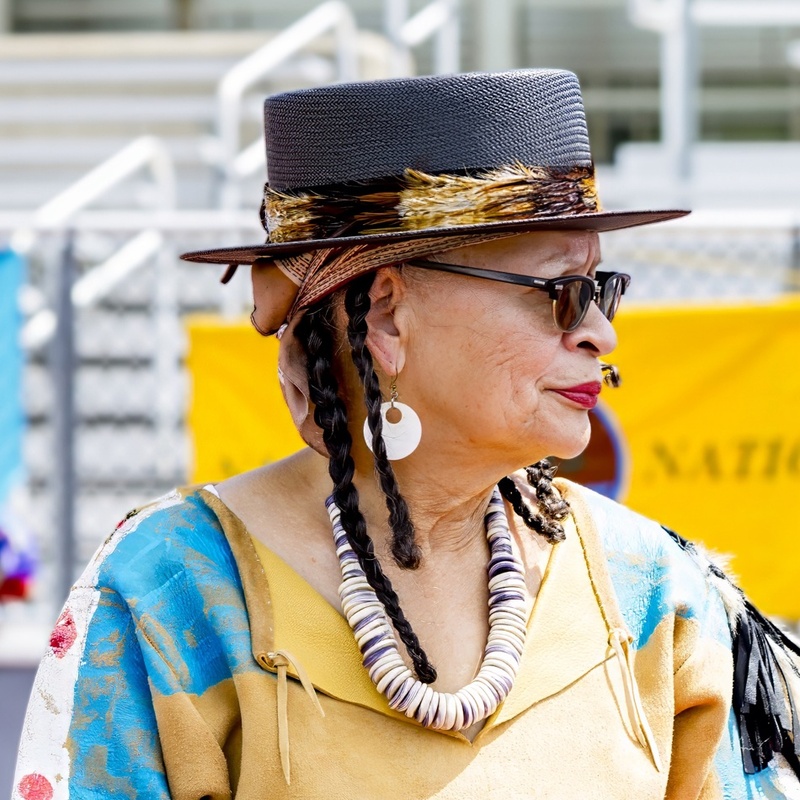
Maria Turner
Sonksq, Nipmuc Nation
Maria Turner is the Director of the Indian Child Welfare Act program for the Mashpee Wampanoag Tribe after a notable 24-year career at the Massachusetts Department of Children and Families, where she advanced to the position of supervisor. Her deep commitment to community welfare was reflected as the School Wellness Counselor for the Wôpanâak Language Reclamation Project.
Additionally, Turner serves as the Chairwoman of the Natick Nipmuc Tribe, representing the Nipmuc Nation Confederacy with distinction. Her leadership extends to her role as a representative for the American Baptist Church Indian Ministries in the Eastern Region, alongside chairing the Mashpee Indian Education Parent Committee and the Massachusetts DCF Racial, Ethnic, and Linguistic Minority Affairs.
Turner, who also co-authored the "Me, Naturally" booklet, addressing the unique care needs of DCF foster children of color, holds a Master of Education in Counseling from Bridgewater State University, underscoring her dedication to enhancing Indigenous and foster care communities' welfare and education.
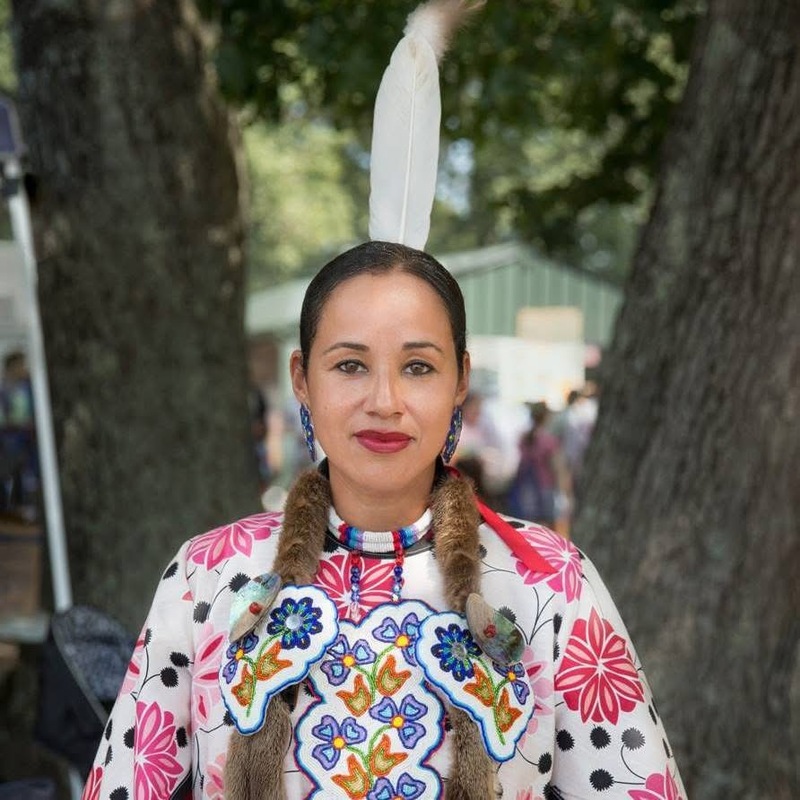
Love Richardson
Sonksq, Hassanamisco Tribe
Love Richardson is a two-term (14-year) Tribal Council member for the Nipmuc Nation, and currently serves as a representative of the Nipmuc/k Unity Working Group, medicine keeper, and tribal leader.
She previously served as a Commissioner for the Massachusetts Commission of Indian Affairs and as Tribal Historic Preservation Department Manager for the Mashpee Wampanoag Tribe, where she helped lead the largest repatriation in U.S. history, the return of Ousamequin Massasoit. She has served on the boards of Native American LifeLines of Boston and the Native Land Conservancy, and in 2017 became the first Indigenous woman invited to speak at Boston's inaugural Women's March, before a crowd of over three million.
A water carrier, medicine keeper, and traditional dancer, Love is the daughter of Sub-Chief Charles Richardson and great-granddaughter of Narragansett Medicine Man George Wilson. Her work centers on the healing and wellness of survivors of violence, the revitalization of Nipmuc language and ceremony, and bringing the Nation's bands together in water ceremony and traditional practice.
Leadership
Tribal Council
The Nipmuc Nation Tribal Council serves as both the Executive and Legislative Branches of the Tribal Government.
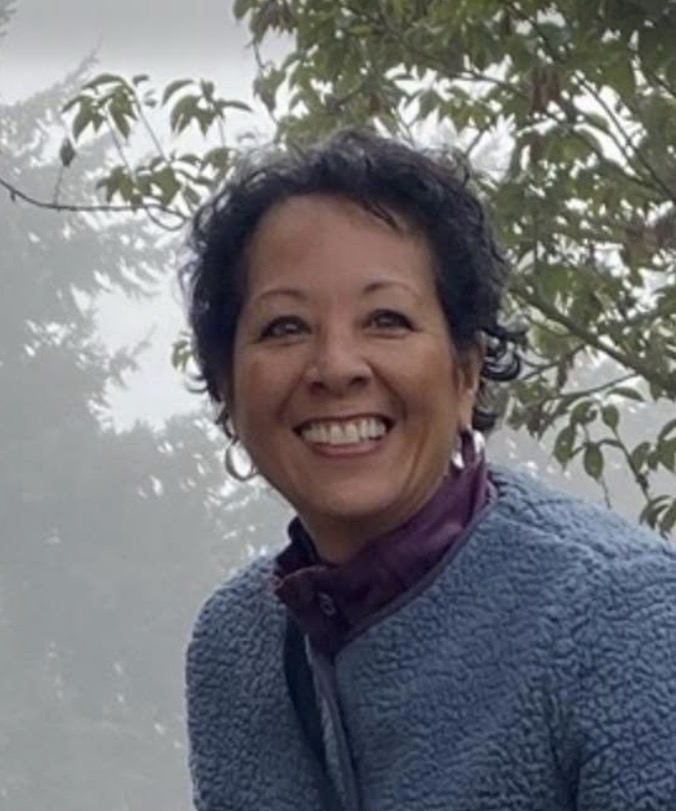
Tenah Richardson
Tribal Chairperson
Read bio
Tenah Richardson is an enrolled member of the Nipmuc Nation and currently serves as Chair on the Tribal Council. She is a direct descendant of the Pegan/Wilson family line, resides in Ware, Massachusetts, and works as a Home Health Care Aide while also owning and operating her own salon business.
She has proudly served the community on council as a councilwoman for over 14 years. Her leadership focus, working alongside her fellow councilors, is to help foster unity, encourage community involvement, and build strong working connections between the Bands.
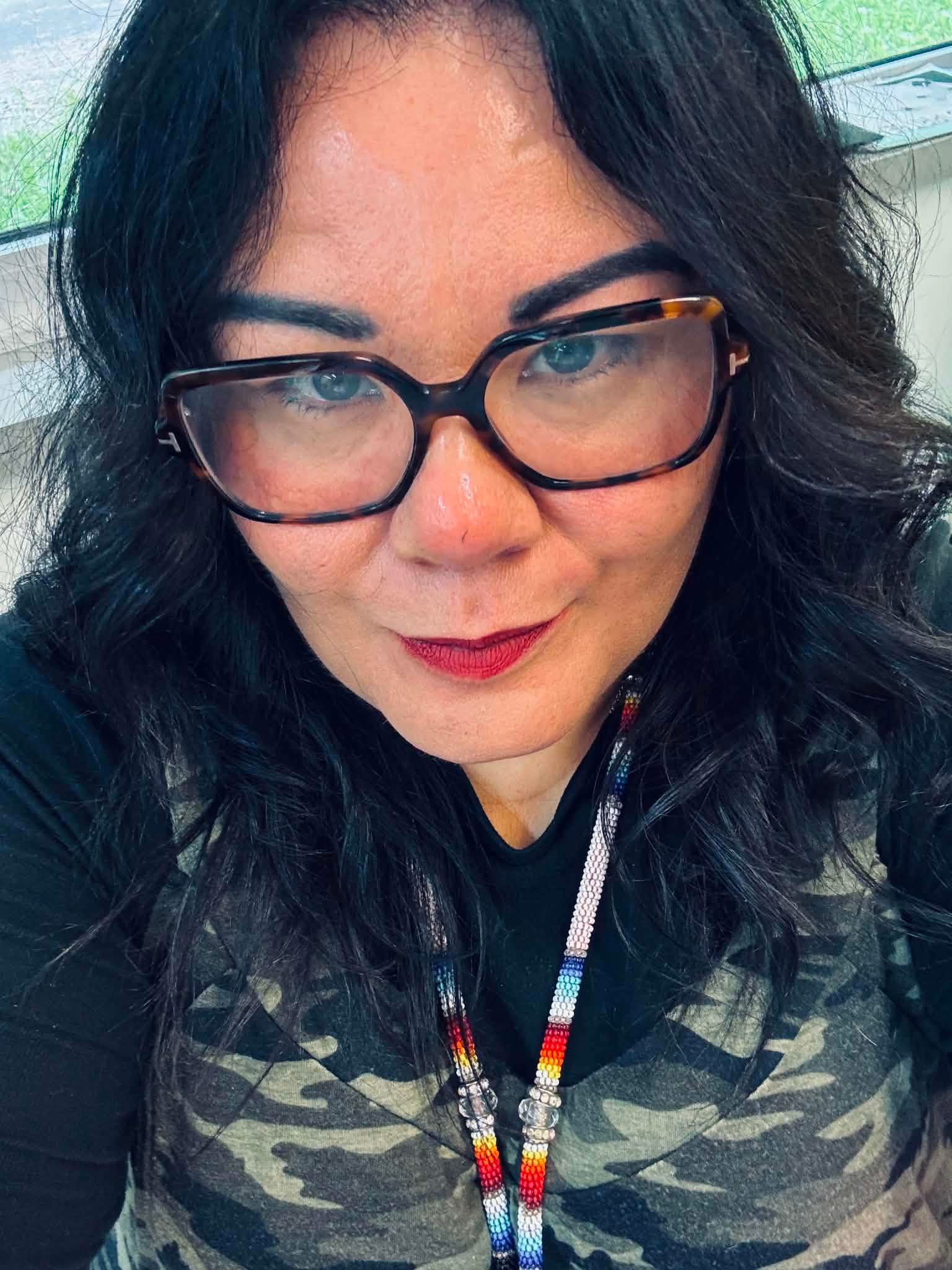
Candia Flynn
Vice Chairperson
Read bio
Candia Flynn is an enrolled member of the Nipmuc Nation and currently serves as Vice-Chair on the Tribal Council. She is the daughter of former Sub Chief Charles Everett Richardson and a direct descendant of the Pegan/Wilson family line. She resides in unceded Mohawk Territory just outside of Montreal, where she works as an educator at Kahnawake Survival School.
She prioritizes traditional values and teachings in her work as an Indigenous educator, and enjoys crafting with a focus on ribbon skirt making as a connection to ancestors and healing. She believes the concerns, needs, and goals of the citizenship should drive the Tribal Council's vision and agenda, and is glad to see the community continue to grow and provide greater access to cultural learning for all citizens.
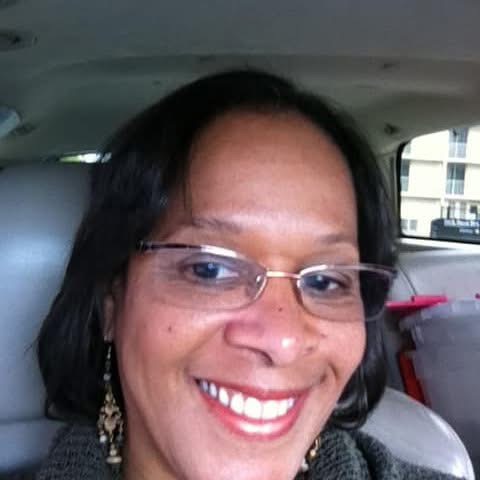
Glenda Hines
Tribal Council Clerk
Read bio
Glenda Vernell Wilson-Hines is the great-granddaughter of Chief Thunderbird, George M. Wilson. Born in Worcester, Massachusetts, she moved with her family to Springfield in the late 1960s, graduating from Springfield Technical High School and the Reserve Officers Training Program before beginning a 30-year career in behavioral health.
She later earned a Bachelor of Science in Human Services and worked as a case manager and operations manager at chemical dependency facilities, and spent 25 years serving within the Morningland International Community, a sanctuary of peace and meditation. Throughout her life, the history and struggles of the Nipmuc people have stayed close to her heart, and many of her family members have served on the Tribal Council before her.
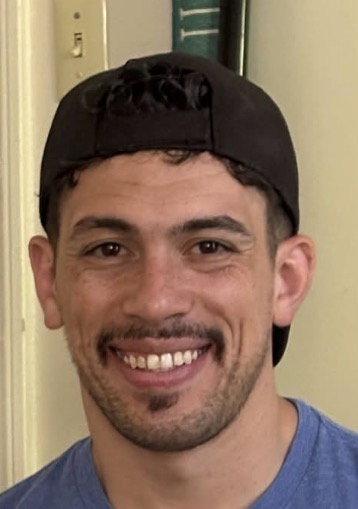
Daylon Cossingham
Tribal Council Member
Read bio
Bio coming soon.
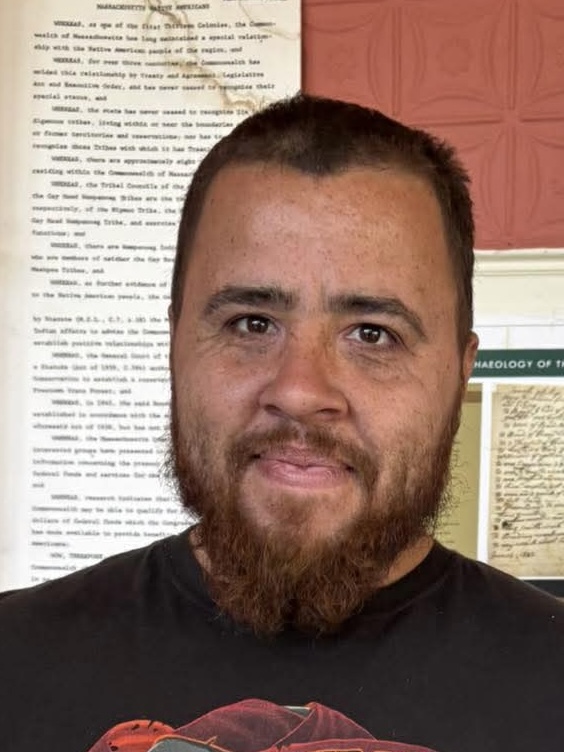
Matthew Richardson
Tribal Council Member
Read bio
Bio coming soon.
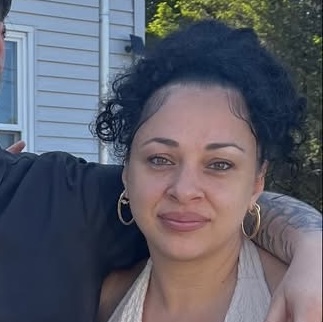
Kiana Richardson
Tribal Council Member
Read bio
Bio coming soon.
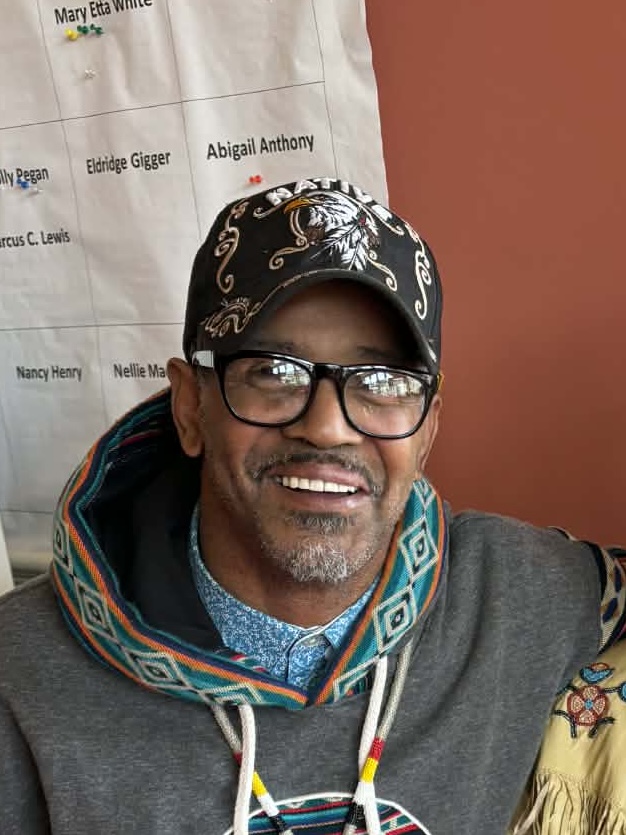
Daryl Barry
Tribal Council Member
Read bio
Bio coming soon.
Love Richardson
Tribal Council Member
Read bio
Love Richardson is a two-term (14-year) Tribal Council member for the Nipmuc Nation, and currently serves as a representative of the Nipmuc/k Unity Working Group, medicine keeper, and tribal leader.
She previously served as a Commissioner for the Massachusetts Commission of Indian Affairs and as Tribal Historic Preservation Department Manager for the Mashpee Wampanoag Tribe, where she helped lead the largest repatriation in U.S. history, the return of Ousamequin Massasoit. She has served on the boards of Native American LifeLines of Boston and the Native Land Conservancy, and in 2017 became the first Indigenous woman invited to speak at Boston's inaugural Women's March, before a crowd of over three million.
A water carrier, medicine keeper, and traditional dancer, Love is the daughter of Sub-Chief Charles Richardson and great-granddaughter of Narragansett Medicine Man George Wilson. Her work centers on the healing and wellness of survivors of violence, the revitalization of Nipmuc language and ceremony, and bringing the Nation's bands together in water ceremony and traditional practice.
Related documents
Releases & Official Statements
Official Tribal Council releases and statements are posted on the News page.
See Press Releases →